discounted business class flights unlock a realm of soaring possibilities where corporate strategy meets the art of elevated travel, proving that opulent transoceanic voyages demand neither an exorbitant fortune nor blind luck. By decoding loyalty tiers, leveraging hidden ticketing pathways, and utilizing private broker networks, savvy modern explorers are quietly revolutionizing how humanity traverses the globe in absolute comfort.
The landscape of premium aviation is shifting dramatically beneath our feet, driven by sophisticated algorithmic matching, credit card reward ecosystems, and clever corporate policy navigation. When ambition meets expert planning, the velvet rope separating ordinary economy passengers from the serene sanctuary of lie-flat suites dissolves entirely, inviting you to witness the skies through a lens of unprecedented sophistication.
Travelers can drastically reduce premium cabin expenses by mastering corporate loyalty tier matching algorithms

Source: skyluxtravel.com
The landscape of modern aviation is undergoing a quiet yet profound transformation where the boundaries between corporate contracts and individual luxury are increasingly blurred. Savvy frequent flyers no longer accept standard retail pricing for long-haul luxury routes, choosing instead to decode the automated pathways that govern airline alliance recognition. By understanding how legacy carriers ingest executive credentials, discerning globetrotters unlock unprecedented access to lie-flat seats and priority services without absorbing the traditional financial burden.
This systematic approach redefines the economics of high-altitude travel, turning exclusive club privileges into attainable assets through strategic digital alignment.
Mastering the mechanics of leveraging existing corporate status to secure elite privileges on luxury routes requires a comprehensive grasp of backend airline alliances and automated tier-matching protocols. When a multinational enterprise negotiates a master services agreement with a dominant global alliance, the resulting partnership often includes proprietary pathways for recognizing high-value employees. Alliance desks utilize sophisticated algorithmic filters to cross-reference corporate domain identifiers and internal employee identification numbers against historical passenger value matrices.
Upon submission through dedicated B2B travel portals, the system evaluates the parent company’s aggregate annual spend, routing density, and premium cabin utilization ratios. If the quantitative threshold meets or exceeds the alliance’s baseline criteria for top-tier loyalty, the automated matching engine instantly recalculates the traveler’s digital profile. This invisible handshake bypasses traditional qualifying flight segment requirements, instantly conferring top-tier privileges such as complimentary upgrades, dedicated check-in, and priority baggage handling onto routes operated by any partner within the alliance network.
Passengers stepping onto an aircraft in foreign terminals suddenly find themselves draped in the invisible armor of elite status simply because their organization’s macro-level economic footprint was successfully translated into micro-level passenger recognition.
Required Documentation for Alliance Tier Equivalence Approval
Navigating the stringent verification processes enforced by global airline alliance desks demands meticulous preparation and an exact compilation of corporate credentials. Carrier alliance desks operate under strict compliance frameworks to prevent fraudulent status accumulation, meaning every submitted file undergoes rigorous automated and manual scrutiny. Presenting the correct evidentiary package eliminates friction during the equivalence review, transforming what could be a lengthy bureaucratic delay into an expedited approval process.
To successfully navigate the verification gateway, applicants must assemble a specific portfolio of verifiable documents that prove both active employment and corporate spending authority. The standard dossier required by alliance desks for immediate tier status equivalence includes the following verified items:
- Official corporate employment verification letter on letterhead, signed by an authorized human resources executive and detailing current active status.
- Recent corporate pay stub with sensitive financial data redacted, explicitly displaying the active corporate email domain and internal employee identification number.
- A certified copy of the active frequent flyer account statement from the competing airline, demonstrating current elite tier standing earned through business travel.
- An authorized letter from the corporate travel department or global travel manager confirming that the applicant is an approved beneficiary of the corporate partnership agreement.
- A scanned copy of a valid corporate identification badge containing a secure holographic element or digital RFID serial verification code.
Strategic Maintenance of Secondary Airline Privileges
Securing elite status through corporate alignment is merely the initial phase; the greater challenge lies in sustaining those privileges across extended booking windows and fluctuating travel calendars. Experienced premium cabin passengers utilize advanced itinerary structuring to protect their secondary airline privileges from premature expiration or algorithmic downgrades. Airlines frequently audit status-matched accounts at specific calendar intervals, requiring strategic scheduling to maintain uninterrupted access to luxury terminals and priority boarding.
Maintaining secondary privileges over prolonged periods involves a deliberate mix of tactical routing and alliance-adjacent booking habits. Travelers often employ the technique of strategic metal blending, where flights are intentionally booked on joint-venture partner airlines that honor reciprocal tier benefits even when the primary qualifying status originates elsewhere. Furthermore, integrating corporate travel credit cards that offer automatic status extension milestones helps bridge the gap between corporate contract renewal cycles.
For instance, a frequent flyer managing an eighteen-month booking horizon might distribute their long-haul segments across at least two alliance-affiliated carriers, ensuring that automated activity flags continuously refresh their tier validity status within the centralized customer relationship management database.
Behind the scenes, corporate travel managers wield immense negotiating leverage, orchestrating sophisticated volume rebates and bespoke overrides for premium seating inventory. Large multinational corporations leverage their sheer volume of annual long-haul bookings to compel airline revenue management teams into carving out hidden discounts and guaranteed upgrade pools. These negotiations occur in closed-door sessions where procurement officers analyze historical route analytics to demand dynamic pricing structures that bypass public GDS display rates.
When a corporation guarantees a minimum annual spend of several million dollars on specific intercontinental corridors, the airline reciprocates by allocating unconstrained business class inventory at reduced baseline fares, supplemented by instant-upgrade certificates embedded directly into the corporate travel portal. This behind-the-counter financial engineering ensures that corporate voyagers consistently occupy the forward cabin at a fraction of the retail cost, setting a benchmark for economical luxury.
Systemic mastery of corporate loyalty algorithms transforms elite airline status from an exclusive privilege for high-spending individuals into an accessible asset for strategic enterprise travelers.
Hidden city ticketing strategies unlock remarkably cheap upfront cabin seats for adventurous globetrotters
Stepping past the velvet curtain into the plush realm of business class no longer requires emptying corporate coffers or surrendering an entire year of accumulated credit card points. By shifting focus toward the overlooked arithmetic of global aviation routing, savvy travelers are discovering that the most expensive front-cabin seats can sometimes be acquired for a fraction of their standard retail cost through unconventional ticketing mechanics.
This approach transforms ordinary transit maps into a chessboard of economic opportunities, allowing passengers to re-evaluate how they purchase movement across the globe.
The aviation marketplace often prices journeys based on market competition rather than raw physical distance, creating structural imbalances that savvy flyers can leverage for substantial financial relief. When airlines price a connecting itinerary through a major hub cheaper than a direct flight terminating at that very same hub, a distinct window of opportunity opens for those willing to alter their travel habits.
Envision a sleek, wide-body aircraft gliding above the clouds on a crisp morning, its spacious lie-flat pods occupied by individuals who paid economy-level prices for premium comfort simply by understanding the mechanics of fare construction.
Risk management protocols associated with booking multi-leg itineraries with intentional drop-off points
Executing a terminus bypass requires a calculated tactical mindset, as airlines design their networks to discourage passengers from abandoning their journeys midway. Implementing robust risk management protocols ensures that travelers can navigate potential disruptions without triggering automated carrier penalties or losing the investment tied to their upfront cabin reservations. A successful operation relies heavily on anticipation, flexibility, and a complete understanding of airline operational behaviors during irregular operations.
Adopting these protective measures safeguards the journey against unforeseen logistical roadblocks:
- Restricting bookings exclusively to one-way itineraries to prevent airlines from automatically canceling the return segment upon a missed connection.
- Eliminating the use of frequent flyer loyalty numbers on the reservation to prevent carriers from auditing account activity and penalizing elite status holders.
- Monitoring real-time weather patterns and air traffic control delays at the intended connection hub to anticipate spontaneous aircraft routing changes.
- Maintaining an emergency contingency fund for instant last-minute alternative transportation in the event that the flight diverts or bypasses the intended drop-off city entirely.
When an aircraft diverts due to mechanical failures or severe weather, the airline reserves the right to land at an alternate airport entirely, instantly disrupting the calculated savings strategy. Mitigating this vulnerability involves studying historical on-time performance metrics for specific flight numbers and avoiding carriers known for frequent scheduling instability on long-haul premium routes. Maintaining absolute situational awareness turns a high-risk gamble into a calculated financial maneuver.
Securing discounted business class flights unlocks luxurious travel without compromise. As industry leaders analyze performance using the hubspot vs marketo vs pardot vs eloqua marketing-analytics ranking , savvy professionals map out brilliant strategies for growth. Elevating your career trajectory reaches new heights when you step off a premium cabin flight totally refreshed and ready to conquer global markets.
Legal implications regarding carrier contracts of carriage when exploiting directional pricing anomalies
Navigating the legal landscape of commercial aviation requires a close examination of the binding agreement established between the passenger and the operating airline at the time of purchase. The contract of carriage explicitly Artikels the rules of engagement, detailing the permissions and prohibitions governing ticket usage, point-to-point transit, and liability limits. While intentionally abandoning an itinerary at a connection point breaches the internal commercial policies of the airline, the legal ramifications generally manifest as administrative sanctions rather than judicial prosecution.
Exploiting directional pricing anomalies operates in a complex regulatory gray area where commercial contract terms clash with the free-market rights of consumers to purchase services without traveling every mandated mile.
Major network carriers frequently update their tariff rules to explicitly forbid practices such as point-concession abuse, hidden-city ticketing, and back-to-back ticketing arrangements. Violating these contractual clauses typically results in non-judicial remedies invoked directly by the airline’s revenue protection department. These administrative penalties commonly include the immediate confiscation of accumulated frequent flyer miles, retroactive billing for the full fare difference of the flown route, and temporary or permanent bans from the carrier’s loyalty program.
Technical procedures for tracking fare bucket discrepancies across global distribution systems
Uncovering these hidden pricing anomalies requires systematic observation of global distribution networks and the underlying fare basis codes that dictate seat availability. Advanced travelers utilize specialized aggregators and matrix search engines designed to scan millions of pricing permutations simultaneously, identifying moments when a longer journey costs significantly less than a shorter one. This technological pursuit demands precision, speed, and an analytical eye capable of deciphering complex alphanumeric fare buckets.
The mechanics of tracking these discrepancies involve several distinct digital processes:
- Querying multi-city routing matrices through specialized fare-sourcing tools to isolate anomalous pricing spreads between direct and connecting legs.
- Analyzing inventory availability codes within specific cabin classes to determine whether discounted business class buckets are being dumped to stimulate demand on competitive routes.
- Setting automated pricing alerts that trigger notifications whenever sudden inventory shifts occur on targeted international trunk lines.
- Cross-referencing historical fare filings to verify whether the observed price variance is a permanent structural anomaly or a temporary flash sale.
Monitoring these digital indicators reveals the hidden logic behind airline revenue management algorithms, which constantly adjust prices based on localized market competition rather than linear mileage calculations. For instance, a flight from a secondary European city connecting through a major capital onward to North America often prices aggressively to lure passengers away from rival carriers. Recognizing these patterns allows analytical globetrotters to secure premium flat-bed seating by simply booking the journey through to the final, unintended destination.
Luggage management protocols for terminus bypass booking methods
Bypassing the final leg of a multi-segment journey imposes strict physical limitations on how travelers manage their personal belongings throughout the transit process. Because checked baggage is automatically routed to the final destination printed on the ticket baggage tag, attempting a terminus bypass with checked luggage is entirely unfeasible. Imagine standing at the luggage carousel of the connection hub while your meticulously tagged suitcase continues its solitary journey thousands of miles further away, leaving you stranded without your wardrobe in a city where you intended to exit.
Adhering strictly to carry-on-only travel protocols is the single most critical rule for executing this strategy successfully without triggering operational complications. Navigating international security checkpoints and overhead bin spaces with a streamlined capsule wardrobe ensures absolute autonomy over your personal property at the intermediate stop. This minimalist approach not only prevents luggage from being checked through to the ultimate destination but also accelerates the transition from aircraft to arrival terminal, allowing for a swift and discreet exit into the city.
Specialized consolidator networks release unpublished front-cabin inventory exclusively through private broker channels
Beneath the polished surface of standard flight booking engines lies a heavily guarded ecosystem where elite corporate allocations and unpublished front-cabin inventory change hands in absolute secrecy. For decades, wholesale aggregators have operated quietly in the shadows of the aviation industry, serving as the master architects behind some of the most profound luxury travel discounts available. While ordinary passengers browse public fares, a parallel marketplace thrives on bilateral contracts, minimum volume commitments, and discreet private networks that redefine how the world flies.
Wholesale aggregators acquire their massive bulk corporate allocations through deeply entrenched relationships with major commercial airlines, often acting as institutional shock absorbers for unsold premium inventory. When multinational corporations negotiate annual travel contracts, they frequently guarantee millions of dollars in spend across multiple global routes in exchange for steep volume discounts and heavily subsidized business class seat allotments. Because corporate travel budgets fluctuate and project teams rarely utilize every assigned seat, a surplus of unallocated luxury inventory begins to accumulate quietly as ticketing deadlines approach.
This is where specialized consolidators step in, purchasing these block allocations in massive, multi-million-dollar tranches months before departure to prevent airlines from suffering total yield loss on empty pods. Picture a sprawling, dimly lit trading floor filled with veteran brokers watching cascading global inventory feeds, where a single midnight transaction secures blocks of first-class suites across transpacific corridors at a fraction of their retail face value.
By absorbing the financial risk of these unsold corporate seats, aggregators unlock exclusive access to private fare codes that never touch public distribution channels, creating an underground economy of ultra-luxury mobility.
Institutional acquisition mechanisms driving wholesale luxury inventory distribution
Entering the realm of wholesale luxury air travel requires navigating a stark operational divide between traditional booking platforms and clandestine broker networks, particularly regarding how consumer protection and financial transparency are handled. Traditional online travel agencies operate under strict regulatory oversight, offering standardized consumer rights, transparent fee disclosures, and straightforward recourse through credit card chargebacks when travel plans unexpectedly disintegrate.
Securing discounted business class flights transforms routine travel into an elevated experience of golden sunrise views above the clouds. Yet finding inner peace matters profoundly, prompting travelers to quickly search for a church near me catholic before embarking on sacred pilgrimages or weekend getaways. Ultimately, returning to those affordable luxury journeys ensures every aspiring adventurer flies in supreme comfort.
Conversely, underground broker networks function on a philosophy of absolute discretion and strict confidentiality, trading regulatory safety nets for unprecedented pricing access that can save adventurous flyers up to seventy percent off retail premium fares. Navigating this opaque space demands a calculated approach to risk management, where buyers exchange standard customer service hotlines for dedicated, white-glove broker relationships that operate entirely outside mainstream consumer protection laws.
To safely navigate these uncharted financial waters, savvy high-net-worth travelers and corporate mobility managers employ rigorous multi-step vetting protocols before wiring funds to independent consolidators. This meticulous verification process safeguards capital against fraudulent operators while establishing long-term, trusted partnerships within the private broker ecosystem. Before committing any financial resources, experienced buyers execute specific investigative measures to ensure absolute operational legitimacy.
- Cross-referencing corporate registry databases to verify physical headquarters, active directors, and verifiable legal incorporation histories across international jurisdictions.
- Demanding verifiable references from established travel management companies or corporate executives who have maintained active accounts with the consolidator for a minimum of three operational years.
- Insisting on escrow arrangements or milestone-based payment structures rather than direct wire transfers to unknown personal accounts, ensuring funds remain protected until ticket issuance is fully confirmed via airline reservation locators.
- Conducting direct airline reservation stress-tests by securing the PNR locator and calling the carrier directly to confirm seat assignment viability, fare class rules, and ticket issuance status prior to releasing final payments.
Absolute financial security in private aviation brokerage is achieved not through blind trust, but through verifiable institutional backing, transparent PNR validation, and rigorous adherence to multi-layered escrow protocols.
The operational mechanics and financial commitments required by these specialized broker networks vary significantly across the industry, reflecting the high-stakes nature of wholesale premium inventory distribution. Understanding these structural frameworks is essential for any traveler looking to transition from public booking channels to exclusive private consolidator networks without compromising capital or travel security.
| Broker Tier | Fee Structure | Minimum Spend Threshold | Ticketing Timeline | Cancellation Policy |
|---|---|---|---|---|
| Private Desk Consolidator | Flat 8% commission on net fare | $25,000 annual volume | 72 hours prior to departure | Strictly non-refundable; voucher issued |
| Institutional Wholesaler | Tiered volume spread (5-12%) | $100,000 corporate account | 14 days to 48 hours pre-flight | Refundable minus a $500 administrative fee |
| Boutique Broker Network | Membership subscription + markup | $10,000 per single itinerary | Immediate issuance upon wire clearance | Credit transferred to future consolidator bookings |
| Enterprise Aggregator | Custom negotiated net-contract rates | $500,000 enterprise commitment | Dynamic allocation up to 6 hours pre-departure | Full airline-backed waiver on force majeure |
Credit card transfer partner sweet spots provide unmatched redemption value for luxury long-haul excursions.: Discounted Business Class Flights
The landscape of global travel has undergone a monumental paradigm shift, turning the once-elusive dream of front-cabin international travel into an achievable reality for the strategic financial planner. Behind the gleaming fuselage of wide-body aircraft lies a complex, shifting architecture of alliance currencies that dictate how points transform into lie-flat seats soaring across continents. Savvy explorers who decode these systems no longer look at air travel as a fixed-cost luxury, but rather as an intricate puzzle of mathematical yields and institutional partnerships.
By treating credit card points as a high-yielding alternative currency, modern globetrotters bypass the inflated cash prices traditionally demanded for premium cabins, unlocking extraordinary experiences for a fraction of their retail value.
Navigating this ecosystem requires a deep comprehension of how major alliances manipulate their inventory and valuation models. The journey from earning everyday currency to sipping champagne above the clouds is paved with precise calculations, instantaneous digital maneuvers, and disciplined portfolio management across multiple financial institutions.
Dynamic pricing shifts implemented by major global airline alliance currency programs
The contemporary aviation industry operates under the heavy influence of dynamic pricing algorithms, fundamentally altering how loyalty program currencies behave across major global alliances like Oneworld, Star Alliance, and SkyTeam. Gone are the days of rigid, distance-based award charts that offered predictable costs for long-haul routes. Instead, carriers such as Air France-KLM Flying Blue, Delta Air Lines, and United Airlines have deployed sophisticated revenue-management systems that tie award pricing directly to commercial seat demand, seasonal fluctuations, and historical booking velocity.
When a specific transatlantic or transpacific route experiences a surge in cash-paying business travelers, the underlying algorithms immediately inflate the mileage requirement, sometimes doubling or tripling the cost within a matter of hours. Conversely, sudden drops in demand or unreserved cabin inventory trigger automated flash reductions, creating fleeting windows where high-value seats suddenly become accessible at historically low point thresholds.
Understanding these algorithmic behaviors allows resourceful travelers to anticipate market corrections, identifying patterns where carriers dump unsold premium inventory onto partner airlines at fixed saver rates before the dynamic pricing engine fully engages. This cat-and-mouse game between automated airline revenue tools and point collectors demands constant vigilance, transforming the redemption process into an active trading desk where timing is everything.
Mathematical formulas used to calculate cent-per-point value when booking international premium cabins
Evaluating the true financial return of a loyalty currency redemption requires strict adherence to mathematical objectivity, cutting through marketing illusions to reveal the actual monetary worth of accumulated points. The foundational metric used by seasoned award optimization experts is the cent-per-point formula, which measures the cash savings achieved relative to the currency expended for a specific itinerary. This calculation provides an uncompromising benchmark that separates mediocre redemptions from masterclass luxury bookings.
Cent-Per-Point Value = (Cash Price of Itinerary minus Taxes and Fees) divided by (Total Points Required) multiplied by 100.
For instance, securing a round-trip transpacific business class ticket priced at eight thousand dollars with nominal carrier-imposed taxes of one hundred dollars, utilizing eighty thousand transferable points, yields a compelling return of nearly ten cents per point. This mathematical reality far exceeds the baseline one-to-two cent valuation typically realized through standard statement credits or portal bookings. Factoring in additional variables such as elite status multipliers, seasonal cash fare volatility, and alternative routing options ensures that every transaction maximizes purchasing power across global luxury corridors.
Procedures for executing instant point transfers during flash award availability windows
Securing rare premium cabin inventory during sudden availability releases requires lightning-fast execution and absolute familiarity with digital banking interfaces. Hesitation often results in missed opportunities as automated broker bots and competing travelers sweep up the remaining seats. Adhering to a strict operational sequence ensures that points move instantly from bank ecosystems to airline accounts without administrative delays.
Confirm that the desired partner award space is actively on hold or visibly searchable on the operating carrier website before initiating any financial movements.
Log into both the credit card reward portal and the destination airline loyalty account simultaneously in separate browser tabs to minimize navigation friction during the transaction.
Verify that the personal profile details, including full legal names and frequent flyer numbers, match identically across both platforms to prevent automated fraud-detection holds.
Input the exact point transfer increment required for the specific booking, keeping in mind alliance transfer ratios that operate on a strict one-to-one or favorable promotional basis.
Securing discounted business class flights transforms tedious travel into an ergonomic haven above the clouds, much like deploying elite rank tracking proxies to stealthily navigate competitive digital landscapes with absolute precision and clarity. As market analysts report surging demand for premium mobility, unlocking these luxurious cabins elevates your corporate journey, ensuring you arrive refreshed, focused, and ready to conquer your ultimate professional milestones.
Authorize the transfer using multi-factor authentication codes routed immediately to a secure mobile device to finalize the digital handoff.
Refresh the airline loyalty dashboard immediately upon transfer completion to confirm the instant point deposit and proceed directly to ticket issuance.
Comprehensive framework for banking flexible currency across multiple bank ecosystems without devaluing existing balances
Preserving the long-term purchasing power of accumulated reward points demands a disciplined treasury management approach across competing financial institutions. Storing all capital within a single proprietary bank ecosystem introduces severe vulnerability to sudden program devaluations, partnership terminations, or unexpected policy changes. A resilient strategy involves diversifying flexible currencies across major transferable point ecosystems, including American Express Membership Rewards, Chase Ultimate Rewards, Capital One Miles, and Citi ThankYou Points.
This multi-pillar framework ensures that points remain adaptable until the exact moment a booking materializes, mitigating the risk of inflation or currency obsolescence. Furthermore, avoiding premature point transfers is paramount; transferring currency speculatively locks the points into a single airline program, destroying their flexibility and subjecting them to potential mileage devaluation by that specific carrier. By maintaining the capital in its most liquid, transferable state, travelers retain the ultimate strategic advantage, pivoting instantly across global alliance networks to secure the highest possible redemption value for their luxury international journeys.
Seasonal repositioning flights offer unprecedented luxury accommodations for a fraction of standard retail pricing.
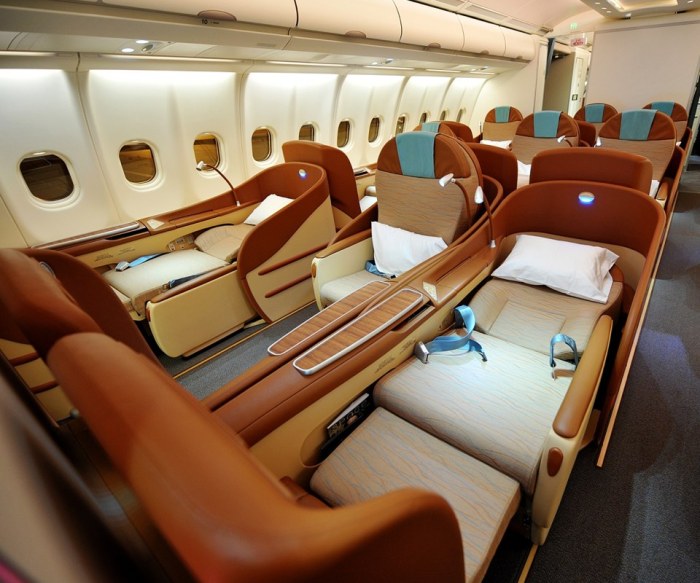
Source: cheapfirstclass.com
Airlines constantly orchestrate complex global networks, meaning widebody aircraft must physically follow shifting seasonal demand across continents to remain profitable. When peak vacation periods end in one hemisphere, carriers migrate their most valuable fleets to entirely new regions, creating a temporary surplus of empty front-cabin inventory that transforms the economics of luxury travel. Industry insiders watch these predictable geographical migrations closely because they present a rare window to experience first-class service without paying standard commercial rates.
Understanding the mechanics behind these fleet movements allows savvy travelers to secure lie-flat beds and gourmet dining at a massive discount.
Carriers radically slash upfront cabin prices during fleet relocation periods primarily due to the harsh economic realities of flying revenue-empty aircraft across oceans. When global demand patterns pivot, airlines are legally and operationally obligated to move massive Boeing 777s, Airbus A350s, and A380s between international hubs to honor future timetables. Leaving these high-value jets empty or flying them as purely empty ferry flights generates zero income while incurring staggering fuel, crew, and airport landing fees.
To recoup a portion of these unavoidable repositioning costs, revenue management teams aggressively slash business and first-class fares well below standard market thresholds, often pricing premium seats closer to economy levels just to ensure every possible inch of the cabin contributes something to the bottom line.
Geographic corridors and timing for transoceanic repositioning deals, Discounted business class flights
Recognizing the exact windows and pathways where these discounted journeys materialize requires tracking the synchronized rotation of global aviation networks. Certain maritime and continental weather shifts dictate predictable mass migrations of commercial fleets twice every single year.
- Transatlantic eastbound corridors from North American hubs to Western Europe experience heavy discounting throughout March and April as carriers prep for the lucrative summer European tourism rush.
- Transatlantic westbound routes from Europe back to North America drop sharply in price during October and November as the holiday crowds dissipate.
- Transpacific pathways connecting Southeast Asian capitals and Australian metros to the United States west coast see major promotional fare drops during shoulder months like May and September.
Vulnerability factors and itinerary risks
Securing deeply discounted front-cabin seats through seasonal fleet shifts requires careful navigation of operational volatility, as these specialized itineraries are notoriously susceptible to sudden network adjustments. Because these flights exist solely to satisfy future scheduling needs rather than established local demand, airlines maintain immense flexibility to alter routes or aircraft types at a moment’s notice. Travelers who book these promotional fares must constantly monitor their PNRs for warning signs such as sudden aircraft downgrades from a three-cabin flagship to a narrow-body jet, unexplained departure time shifts exceeding several hours, or complete flight cancellations resulting from altered seasonal demand forecasts.
When an equipment swap occurs, passengers risk losing their coveted private suite in exchange for standard domestic recliners, making travel insurance and flexible backup plans an absolute necessity.
Imagine stepping onto a massive double-deck aircraft during a quiet autumnal crossing from a bustling North American metropolis toward an ancient European capital, where the usual frantic energy of boarding has completely vanished into a peaceful hush. The cabin hums with an almost meditative tranquility as soft, ambient amber lighting casts a warm glow over a sea of entirely empty middle suites, leaving only a handful of discerning travelers scattered across the expansive forward deck.
Flight attendants move with unhurried grace, offering flute-filled welcomes of vintage champagne while the heavy scent of warm toasted nuts and freshly baked artisan bread drifts gently from the galley. Outside the reinforced windows, the twilight sky fades into deep indigo over the freezing expanse of the North Atlantic, while inside, the atmosphere resembles a private, five-star floating lounge suspended far above the clouds.
Wrapped in heavy cotton duvets on a fully reclined lie-flat bed, the distant murmur of jet engines provides a soothing, hypnotic soundtrack to a journey where luxury has been miraculously decoupled from its usual exorbitant price tag.
Auction platforms allow intrepid flyers to bid their own price on vacant first-class and business-class suites

Source: flightslux.com
The landscape of modern aviation is undergoing a quiet transformation, shifting power back into the hands of observant travelers who understand how to navigate airline inventory dynamics. Beyond traditional ticketing counters and loyalty programs, a dynamic marketplace of vacant front-cabin suites awaits those willing to engage in tactical bidding. Airlines no longer accept empty seats as a permanent loss of revenue; instead, they deploy sophisticated auction mechanisms that invite passengers to name their price for a taste of luxury.
Mastering the delicate art of securing these coveted forward-cabin seats requires a deep dive into the human psychology of pricing and the rigid mathematics of airline inventory management systems. When an aircraft pushes back from the gate with an empty first-class suite, the carrier loses potential ancillary revenue forever. Auction platforms bridge this gap by encouraging spontaneous investments from economy passengers, turning a routine journey into an extraordinary travel experience through calculated financial engagement.
Psychological Bidding Thresholds And Valuation Strategies
Navigating the psychological thresholds of upgrade bidding requires a nuanced understanding of perceived value versus actual cost. Travelers frequently make the mistake of submitting arbitrary round numbers or anchoring their bids to the absolute minimum floor set by the airline. Successful bidders often analyze the gap between their initial economy ticket price and the standard business-class fare, targeting a sweet spot that typically rests between thirty and forty-five percent of the outright purchase differential.
This specific range triggers favorable algorithmic evaluation while preventing the traveler from overpaying for a product that might have otherwise cleared at a lower rate.
The mind of the bidder often wrestles with the fear of rejection, leading to inflated offers driven by emotional excitement rather than sound financial logic. To combat this impulse, seasoned frequent flyers establish strict personal valuation ceilings before initiating the bidding process. By treating the upgrade as a calculated investment rather than a luxury impulse buy, travelers can remain detached and objective.
Understanding that inventory scarcity fluctuates by route, day of the week, and seasonal demand allows the astute passenger to craft a bid that respects airline yield management models while protecting their own travel budget from unnecessary inflation.
Revenue Management Software And Algorithmic Evaluation
Behind every successful upgrade bid lies an intricate dance of enterprise revenue management software evaluating last-minute cash offers against strict historical load factor predictions. Airlines utilize predictive analytics engines—such as those provided by Lufthansa Systems or PROS—to forecast the exact probability of selling remaining premium seats outright at the full retail price right up until departure. When a passenger submits a bid, the system immediately cross-references this offer with historical data for that specific flight number, accounting for seasonal trends, corporate booking patterns, and the likelihood of last-minute full-fare ticket purchases by business travelers.
The software operates on a priority matrix where cash bids are dynamically ranked against frequent flyer mileage upgrade requests and elite status clearing protocols. If the predictive algorithm determines that the cabin will likely remain partially empty and the cash offer exceeds the marginal cost of carrying an additional passenger—such as catering and lounge access expenses—the system flags the bid for provisional approval.
Ascending to the front cabin transforms ordinary travel into a plush journey of sleek leather seats and panoramic skies, proving luxury is finally within reach. Savvy explorers elevate their live entertainment by unlocking seatgeek coupons for unforgettable arena experiences before boarding. Ultimately, securing discounted business class flights empowers every ambitious dreamer to conquer the globe in ultimate style and absolute comfort.
This automated decision-making process removes human emotion from the equation, ensuring that airlines maximize every available square foot of front-cabin real estate without cannibalizing their high-yield corporate customer base.
Success in modern flight upgrades relies on aligning personal financial thresholds with the predictive capacity of airline revenue algorithms, turning empty premium seats into mutual victories.
Tactical Approaches For Forty-Eight Hour Upgrade Timing
The crucial forty-eight-hour window prior to departure represents the golden hour for securing vacant business-class and first-class suites through auction platforms. During this critical timeframe, airline operational teams finalize aircraft rotations, process last-minute cancellations, and release blocked corporate inventory back into the general pool. Implementing a precise timing strategy during this window significantly elevates the probability of winning an upgrade without triggering automated rejection filters.
Reviewing the structural timeline of pre-departure inventory releases helps travelers position their bids for maximum effectiveness before the boarding gate takes control of the manifest:
- Monitor flight loads precisely fifty hours before departure using expert-level aviation data tools to verify the exact count of unsold premium seats.
- Submit or modify existing upgrade bids exactly forty-eight hours out, coinciding with the automated purging of unconfirmed corporate traveler holds.
- Check seat map availability hourly during the final forty-eight-hour window to gauge competing bid activity and adjust financial offers upward if inventory rapidly tightens.
- Contact customer support or check the airline application forty-five hours prior to departure to ensure the bidding portal has successfully locked in the final offer before manual airport control commences.
Minimum Bid Floors Across Major International Carriers
Comparing minimum bid floors across premier international network carriers during peak holiday travel seasons reveals distinct commercial strategies regarding vacant premium inventory. Airlines approach peak periods—such as the December holidays or the European summer exodus—with varying degrees of confidence in their ability to sell out front-cabin suites at full retail prices. Consequently, the baseline financial threshold required to enter the auction pool shifts dramatically depending on the carrier’s hub dynamics and regional market demand.
Analyzing specific airline thresholds during high-demand travel periods provides a clear benchmark for structuring competitive yet economical upgrade offers:
| International Carrier | Peak Season Minimum Bid Floor (Transatlantic Route) | Primary Algorithmic Focus |
|---|---|---|
| Lufthansa Group | High ($650 – $900 USD equivalent) | Yield protection and strict corporate fare integrity. |
| Singapore Airlines | Moderate-High ($550 – $800 USD equivalent) | Service consistency and high-value customer retention. |
| Emirates | Dynamic/Variable ($800 – $1,200+ USD equivalent) | Maximizing ancillary revenue on high-density A380 routes. |
Corporate travel policy loopholes can be ethically exploited to acquire long-haul luxury upgrades

Source: business-class.com
Modern business travel has evolved beyond rigid corporate compliance, revealing nuanced avenues where astute mid-level professionals can elevate their airborne experience. Navigating the intricate intersection of corporate budgets and personal comfort requires a strategic mindset, allowing ambitious workers to soar above the standard economy cabin without violating professional codes of conduct. By looking closely at expense management mechanics and framing premium comfort through the lens of physiological well-being, savvy employees are successfully reshaping their long-haul journeys into restorative experiences.
Transforming a standard corporate travel budget into a luxury ticket relies on understanding the modular nature of modern airline pricing and corporate reimbursement frameworks. Professionals who master the art of strategic allocation can leverage corporate allowances to secure the front of the plane, turning grueling intercontinental flights into productive workspaces.
Mid-level employee redirect strategies for cabin elevation perks
Mid-level managers often find themselves bound by strict travel caps, yet clever structuring of allowable expenditures bridges the gap between standard economy and business class. When corporate guidelines permit a specific flight budget, employees can analyze historical pricing trends to identify off-peak booking windows where standard fares approach premium territory. By booking during these temporal anomalies, the baseline cost aligns closely with employer expectations, leaving a narrow financial delta.
Employees then deploy personal funds or accumulated loyalty points to cover the remaining upgrade differential, effectively merging corporate obligations with personal travel aspirations. This meticulous approach transforms rigid policy constraints into a flexible canvas, proving that professional dedication and elevated comfort can peacefully coexist at thirty thousand feet.
- Monitor historical ticket pricing across preferred routes to identify seasonal dips that naturally lower the baseline cost of premium cabins.
- Accumulate flexible reward currencies through everyday business expenses that are subsequently reimbursed by the employer.
- Coordinate booking timelines with corporate finance cycles to capitalize on quarterly budget reviews where travel caps temporarily expand.
Administrative procedures for expense management software extensions
Modern corporate travel relies heavily on automated platforms like Concur or Expensify, which feature modular accounting capabilities that can be utilized to separate flight costs into distinct components. Travelers can systematically divide a single journey into constituent parts, such as base airfare, seat selection fees, and ancillary comfort packages, provided the total sum remains compliant with company thresholds. Expense management software extensions allow users to tag specific ledger entries with custom project codes, ensuring complete transparency for corporate auditors while isolating the financial mechanics of an upgrade.
Visualizing this process helps clarify how complex transactions are broken down into manageable ledger entries. Imagine a digital dashboard glowing with emerald-green verification checkmarks, where a single long-haul itinerary is neatly segmented into distinct, audit-friendly line items representing base transportation and optional enhancements.
- Isolate the base economy fare as the primary corporate expense entry within the automated dashboard.
- Apply secondary corporate stipends, such as client-entertainment allowances or remote-work wellness stipends, toward ancillary travel fees.
- Attach comprehensive digital receipts and itemized breakdown sheets to satisfy internal auditing protocols instantly.
Ethical boundaries and employment contract considerations
Navigating the gray areas of corporate travel policy demands rigorous adherence to moral principles and a thorough review of employment agreements. Crossing the line from clever optimization to policy violation can jeopardize career progression, making transparency an absolute prerequisite for any ambitious professional. Ethical navigation ensures that the employer incurs no additional financial burden and that productivity metrics remain uncompromised throughout the journey.
Optimization must never compromise corporate integrity; transparency with financial controllers remains the ultimate safeguard against policy violations.
Corporate handbooks frequently Artikel strict anti-fraud measures, yet they rarely penalize employees who utilize their own accrued benefits or independent financial instruments to enhance their travel conditions. Maintaining this delicate balance requires clear documentation that proves the company paid no more than its authorized maximum allocation for the route in question.
- Review the corporate code of conduct explicitly regarding the commingling of personal loyalty points with business itineraries.
- Ensure that all selected upgrades generate zero excess cost for the accounting department compared to the standard company-mandated booking.
- Maintain open communication channels with direct supervisors regarding the utilization of personal perks during business trips.
Step-by-step method for convincing corporate travel administrators to approve premium cabin exceptions
Securing formal sign-off for a front-cabin exception requires framing the request not as a luxury indulgence, but as an indispensable investment in employee wellness and performance longevity. Travel administrators respond favorably to data-driven proposals that demonstrate how physical fatigue directly impacts post-flight business outcomes, particularly for high-stakes international negotiations.
- Compile verifiable medical or ergonomic data illustrating the physiological toll of long-haul economy confinement on cognitive function.
- Present a cost-benefit analysis comparing the price of a business-class ticket against the potential value of secured client contracts following a well-rested arrival.
- Draft a formal memorandum highlighting past successful projects executed under optimal travel conditions to establish a reliable performance baseline.
- Schedule an in-person consultation with the travel manager to review the exception request well in advance of the departure date.
Last Point

Source: cloudfront.net
Ultimately, mastering the art of acquiring premium cabin seats transforms the horizon from an expensive barrier into an accessible canvas for your grandest adventures. As you implement these calculated strategies, every mile traveled becomes a testament to resourcefulness and vision, ensuring your next journey rests firmly at the intersection of supreme luxury and intelligent investment.
